For a region where tourism and livelihoods are so closely connected to the natural environment, the question is no longer whether climate change will affect the future of the Himalayas. It is how communities, governments and the tourism industry will respond.
1. Understanding the changing Himalayan climate
The Hindu Kush Himalaya (HKH), stretching across eight countries from Afghanistan to Myanmar, contains the largest concentration of glaciers outside the polar regions. Often described as the Third Pole, this mountain system is a critical source of freshwater for hundreds of millions of people living in the mountains and billions more downstream.
However, this vast natural water reservoir is under increasing pressure.
According to the International Centre for Integrated Mountain Development (ICIMOD), the glaciers of the Hindu Kush Himalaya are losing ice at approximately twice the rate recorded around the turn of the century. Its 2026 assessment reports that the region's glaciers lost around 12% of their total area between 1990 and 2020, alongside a substantial decline in ice reserves.
Several interconnected changes are contributing to this transformation:
Rising temperatures: Higher average temperatures are accelerating glacier melt, affecting snow accumulation and altering the seasonal availability of water.
Declining and unpredictable snowfall: Snowfall patterns are becoming less dependable in many parts of the Himalayas. Changes in the timing, quantity and persistence of snow affect agriculture, water resources and winter tourism.
Changing rainfall patterns: Instead of predictable seasonal rainfall, mountain regions are increasingly experiencing irregular precipitation, prolonged dry periods and short spells of intense rainfall.
Glacier retreat and permafrost degradation: Melting glaciers and thawing frozen ground are destabilising mountain slopes and increasing the potential for landslides, rockfalls and other hazards.
Increasing extreme weather events: Cloudbursts, flash floods, glacial lake outburst floods and landslides are creating growing risks for mountain settlements and infrastructure.
These changes do not occur uniformly across the Himalayan region. Local geography, altitude, geology and climatic conditions determine how individual valleys and communities experience them. Nevertheless, the broader direction is clear: the mountain environment is becoming increasingly unpredictable.
2. Water security: A growing concern for Himalayan communities
Water is perhaps the most important link between climate change and everyday life in the Himalayas.
In high-altitude regions such as Ladakh, Spiti and parts of the western Himalayas, communities depend on a delicate seasonal water cycle involving winter snowfall, glacier melt, springs and traditional irrigation systems.
Water is essential for drinking, agriculture, livestock and maintaining village ecosystems. Even modest changes in its seasonal availability can have significant consequences.
In Ladakh, where agriculture is traditionally dependent on snowmelt and carefully managed irrigation channels, changes in snowfall and melting patterns can disrupt the timing of water availability. Farmers may find themselves facing insufficient water during critical stages of cultivation, while warmer temperatures and longer dry periods can increase irrigation demand.
The situation is particularly concerning for smaller villages that depend on local springs, streams and glacial sources.
The challenge is not simply whether glaciers are melting faster today. Increased meltwater may temporarily increase water availability in some catchments, but as glaciers continue to lose mass, their ability to sustain river flows during dry periods can diminish.
This creates a difficult long-term situation: periods of excessive water followed by growing seasonal shortages.
For Himalayan communities, water insecurity can eventually translate into reduced agricultural production, livestock losses, food insecurity and increased dependence on external resources.
3. The impact on traditional livelihoods and mountain economies
The Himalayan economy has historically been built around a close relationship between people and their surroundings. Agriculture, animal husbandry, handicrafts, pastoralism and seasonal trade have sustained mountain communities for generations.
Climate change is putting pressure on many of these traditional occupations.
Agriculture and food security
Traditional crops such as barley, buckwheat, wheat and other high-altitude varieties are closely connected to local climatic conditions. Changes in temperature, snowfall and water availability can alter growing seasons, affect crop yields and increase exposure to unexpected weather.
While warmer temperatures may create opportunities to cultivate certain crops at higher elevations, they can also introduce new pests, increase water stress and disrupt established agricultural cycles.
Pastoralism and livestock
Pastoral communities across the Himalayas depend on seasonal grasslands and high-altitude pastures to sustain their livestock.
In Ladakh's Changthang region, the Changpa nomads have traditionally depended on the availability of grazing grounds for their pashmina goats, sheep and yaks.
Changing snowfall, water availability and pasture conditions can affect the quality and distribution of grazing resources. This has implications not only for livestock health but also for the production of pashmina, an important source of income for local families.
For communities whose livelihoods depend on generations of accumulated knowledge about seasonal migration and pasture management, changing environmental conditions can make traditional practices increasingly difficult to sustain.
Traditional knowledge and cultural continuity
Climate change also threatens something less visible but equally important: the relationship between mountain communities and their inherited knowledge.
Traditional irrigation systems, seasonal farming calendars, medicinal plant knowledge and pastoral migration patterns have evolved through centuries of observation and adaptation.
As climatic conditions change, some of these practices may become less reliable. Younger generations may also find fewer economic opportunities in traditional occupations, accelerating migration towards towns and cities.
The loss is therefore not merely economic. It is also cultural.
4. Tourism in the Himalayas: An industry exposed to climate change
Tourism has emerged as one of the most important economic activities across the Himalayan region.
From the trekking routes of Nepal and Uttarakhand to the monasteries of Ladakh, the valleys of Kashmir and the high-altitude landscapes of Himachal Pradesh, tourism provides employment and income to thousands of local households.
Hotels, homestays, restaurants, taxi operators, guides, trekking crews, artisans, farmers and small businesses all depend, directly or indirectly, on the movement of visitors.
However, tourism in the Himalayas is fundamentally dependent on environmental stability. The very landscapes, seasons and natural experiences that attract visitors are being affected by climate change.
The impact can be understood across several dimensions.
Unpredictable travel seasons
Tourism in many Himalayan destinations follows relatively established seasonal patterns. Snowfall, road accessibility, river conditions and weather determine when destinations can be visited.
Changing weather patterns are making these windows less predictable.
Unusual snowfall, delayed snowmelt, sudden rainfall and extreme temperatures can disrupt travel plans, close mountain roads and affect the operation of tourism businesses.
For destinations that depend heavily on a short summer season, even a few weeks of disruption can have significant financial consequences.
Increasing risks to tourism infrastructure
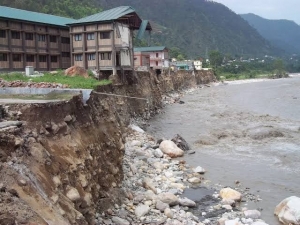
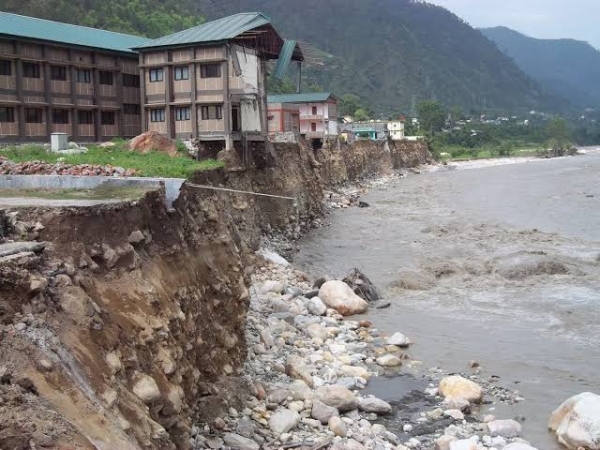
Mountain roads are particularly vulnerable to landslides, flash floods, slope instability and intense rainfall.
The destruction of roads and bridges can isolate entire valleys, interrupt supply chains and leave travellers stranded.
The 2023 floods in parts of the Himalayas and the devastating monsoon-related damage in Himachal Pradesh in 2025 illustrate the vulnerability of mountain infrastructure and settlements to interacting environmental hazards. Himachal Pradesh's 2025 Post Disaster Needs Assessment highlights the cascading effects on communities, infrastructure and the wider economy.
For tourism operators, these disruptions translate into cancelled itineraries, additional operating costs, accommodation losses and uncertainty for future bookings.
For local communities, the consequences can be even more severe, particularly when transport disruptions affect access to essential supplies and healthcare.
Changing natural attractions
The Himalayan landscape is itself a major tourism attraction. Glaciers, alpine meadows, snow-covered peaks, high-altitude lakes and seasonal wildlife experiences draw visitors from around the world.
As temperatures rise and ecosystems change, the character of these landscapes may also change.
Altered flowering seasons, changing vegetation patterns, reduced snow persistence and pressure on wildlife habitats can affect nature-based tourism.
In destinations where visitors travel specifically to experience snow, glaciers or seasonal natural phenomena, these changes may eventually influence tourism demand.
Pressure from unregulated tourism
Climate change is not the only challenge facing Himalayan tourism.
Rapid and poorly planned tourism development can intensify environmental stress. Excessive construction, unmanaged waste, groundwater extraction, traffic congestion and pressure on fragile ecosystems can weaken the natural resilience of mountain destinations.
When climate change and unsustainable development interact, the consequences can be particularly damaging.
A mountain destination cannot indefinitely accommodate increasing visitor numbers without considering its ecological limits.
5. Ladakh: A closer look at a fragile high-altitude ecosystem
Ladakh offers an important perspective on the relationship between climate change, tourism and mountain livelihoods.
Its cold desert ecosystem has evolved under conditions of limited rainfall, extreme temperatures and dependence on seasonal snowfall and meltwater.
For generations, Ladakhi communities have developed sophisticated ways of living within these constraints. Traditional mud-brick architecture, community-managed irrigation channels, carefully timed agricultural practices and seasonal pastoral movements are all expressions of this adaptation.
Today, these systems face new challenges.
The changing cryosphere
The glaciers and snowfields surrounding Ladakh are important sources of water for its settlements and agricultural valleys.
Changing snowfall and accelerated ice loss threaten the long-term reliability of these resources. While the heavily glaciated Karakoram has shown a comparatively different pattern from many other Himalayan regions, it should not be assumed to be immune to climate change. Regional differences are important when interpreting glacier trends.
The importance of artificial glaciers and traditional water management
Innovations such as artificial glaciers and ice stupas have brought attention to the need for local water conservation solutions.
Traditional irrigation systems, spring protection, rainwater harvesting and improved water management also have an important role to play.
However, technological interventions alone cannot resolve the broader challenges of changing precipitation and long-term glacier loss. They must be part of a wider water-management strategy.
Tourism growth and environmental responsibility
Ladakh has witnessed a substantial transformation through tourism. The industry has created opportunities for local entrepreneurs, homestay owners, taxi operators, guides, artisans and young people.
At the same time, increasing visitor numbers place pressure on limited water resources, waste-management systems, energy infrastructure and fragile habitats.
The growth of tourism must therefore be balanced with the region's ecological capacity.
For instance, a tourism model that encourages longer stays, smaller groups, locally owned accommodation, responsible waste management and meaningful cultural exchanges can distribute economic benefits more widely while reducing some of the pressures associated with high-volume tourism.
The future of Ladakh tourism should not be measured simply by the number of visitors arriving each season, but by how much value tourism creates for local communities without compromising the environment on which their future depends.
6. Climate change and the future of Himalayan tourism: Rethinking the tourism model
The challenges facing Himalayan tourism call for a fundamental shift in how destinations are developed, marketed and experienced.
The conventional approach of maximising visitor numbers, building more accommodation and expanding infrastructure may generate short-term economic growth. However, it does not necessarily create a resilient tourism economy.
A more sustainable approach would place ecological responsibility and community participation at the centre of destination development.
Some important areas of change include:
1. Moving towards slow and responsible travel
Encouraging visitors to spend more time in fewer destinations can reduce unnecessary movement and allow tourism income to reach local businesses more effectively.
Longer stays can also create opportunities for cultural experiences, village interactions, local food and nature-based activities.
2. Supporting locally owned tourism enterprises
Homestays, local guides, family-run guesthouses, community-based tourism initiatives and local transport operators help retain tourism revenue within mountain communities.
Strengthening these enterprises can make local economies less dependent on large external operators.
3. Diversifying tourism seasons and experiences
Destinations should explore opportunities beyond conventional peak-season sightseeing.
Cultural journeys, village walks, local festivals, photography, birdwatching, astronomy, handicrafts and educational experiences can help diversify tourism offerings, provided they are developed within ecological limits.
4. Improving environmental management
Responsible water consumption, waste segregation, renewable energy, sewage treatment and sustainable construction should become basic requirements for tourism infrastructure.
Tourism businesses must recognise that environmental management is not an additional feature but an essential part of operating in fragile mountain ecosystems.
5. Strengthening disaster preparedness
Tour operators, accommodation providers and local authorities need better access to weather forecasts, road advisories, emergency communication and evacuation protocols.
Tourism itineraries should include flexibility to respond to changing conditions rather than relying on rigid schedules.
6. Making climate awareness part of the visitor experience
Travellers should understand the environmental realities of the destinations they visit.
Responsible tourism can create opportunities to introduce visitors to traditional water management, local agriculture, glacier ecology and the challenges facing mountain communities.
The objective should be to create a more informed relationship between visitors and the landscapes they come to experience.
7. Building climate-resilient Himalayan communities
Addressing climate change in the Himalayas requires more than environmental regulations or isolated conservation projects. It requires a coordinated effort involving local communities, scientific institutions, governments, tourism businesses and visitors.
There are several priorities that deserve greater attention.
Community-led adaptation: Local communities must be active participants in climate planning. Their knowledge of water sources, seasonal weather, agriculture and mountain ecology is invaluable when developing practical adaptation strategies.
Better scientific monitoring: Continuous monitoring of glaciers, snow cover, rainfall, groundwater and permafrost is essential. There is also a need for more representative monitoring stations across poorly studied Himalayan regions.
Investment in water security: Protecting springs, restoring traditional irrigation systems, improving water storage and developing efficient irrigation practices should be priorities for high-altitude settlements.
Climate-resilient infrastructure: Roads, bridges, buildings and tourism facilities must be designed with greater consideration for local geology, drainage patterns and changing weather conditions.
Livelihood diversification: Communities should have access to multiple sources of income, reducing their dependence on a single occupation or a short tourism season.
Regional cooperation: Climate change does not recognise administrative boundaries. The interconnected nature of Himalayan rivers, glaciers and ecosystems makes regional cooperation and knowledge-sharing essential.
The need for such coordinated action is increasingly recognised. India's National Glacial Lake Outburst Flood Risk Mitigation Programme, for instance, includes Ladakh and several Himalayan states among its initial areas of implementation, with provisions for early warning systems and local-level resilience measures.
8. The responsibility of the tourism industry
Tourism is often viewed as a sector that suffers from climate change. However, it must also recognise its responsibility towards the environment.
The tourism industry has an opportunity to become an active contributor to climate resilience rather than simply adapting to its consequences.
Travel companies, destination management organisations, accommodation providers and local operators can collectively influence how tourism develops in mountain regions.
For a destination management company operating in Ladakh, this responsibility begins with understanding the landscape beyond its commercial potential.
It means choosing accommodation and suppliers that follow responsible environmental practices, encouraging travellers to respect local water resources, supporting local livelihoods and avoiding unnecessary pressure on ecologically sensitive destinations.
It also means being honest with travellers about changing weather conditions, road accessibility and environmental risks.
Tourism should create economic opportunities without undermining the very environment and cultural heritage that make a destination special.
Perhaps most importantly, the industry must move away from treating sustainability as a marketing expression and begin integrating it into everyday operational decisions.
9. The Himalayas of tomorrow: A shared responsibility
The Himalayas are changing, and the changes taking place today will influence the lives of generations to come.
The loss of glaciers, uncertainty around water resources, changing agricultural conditions and increasing environmental risks are not isolated developments. They are interconnected challenges that affect the ecological, economic and cultural foundations of mountain life.
A recent ICIMOD assessment of the 2026 monsoon season also highlights an important concern: even when overall rainfall is below normal, short periods of intense precipitation can create serious risks of flash floods and landslides. This underlines why mountain communities cannot rely on historical weather patterns alone when planning for the future.
Yet, the future of the Himalayas need not be defined entirely by vulnerability.
Mountain communities possess generations of knowledge about living in difficult environments. Traditional water management, community cooperation, sustainable agriculture and resource-sharing practices offer valuable lessons for building resilience.
The challenge is to bring this knowledge together with modern science, appropriate technology and responsible development.
For tourism, this is an opportunity to reconsider what it means to experience the Himalayas. Instead of focusing solely on destinations, distances and attractions, the emphasis can shift towards understanding the landscapes, respecting local cultures and contributing positively to the communities that sustain them.
The responsibility does not rest with governments or local communities alone. Tourism businesses, travellers and everyone who benefits from the Himalayas have a role to play.
The future of Himalayan tourism depends on the future of the Himalayas themselves. And protecting that future must begin with how we choose to travel, develop and live in these mountains today.
References and further reading
The following scientific and institutional publications provide a useful starting point for understanding the changing Himalayan climate.
1. ICIMOD (2026) – Hindu Kush Himalaya glaciers losing ice at double the rate since 2000.
Read the glacier assessment
2. ICIMOD (2026) – Hindu Kush Himalaya Monsoon Outlook 2026.
Read the monsoon outlook
3. ICIMOD – Water, Ice, Society, and Ecosystems in the Hindu Kush Himalaya (HI-WISE).
Read the regional assessment
4. Government of India – Adverse Effects of Climate Change on Himalayas (December 2025).
Read the government assessment
5. Scientific Reports (2025) – Permafrost degradation and land subsidence in Lahaul and Spiti.
Read the scientific study
6. Himachal Pradesh State Disaster Management Authority – Post Disaster Needs Assessment 2025.
Read the assessment